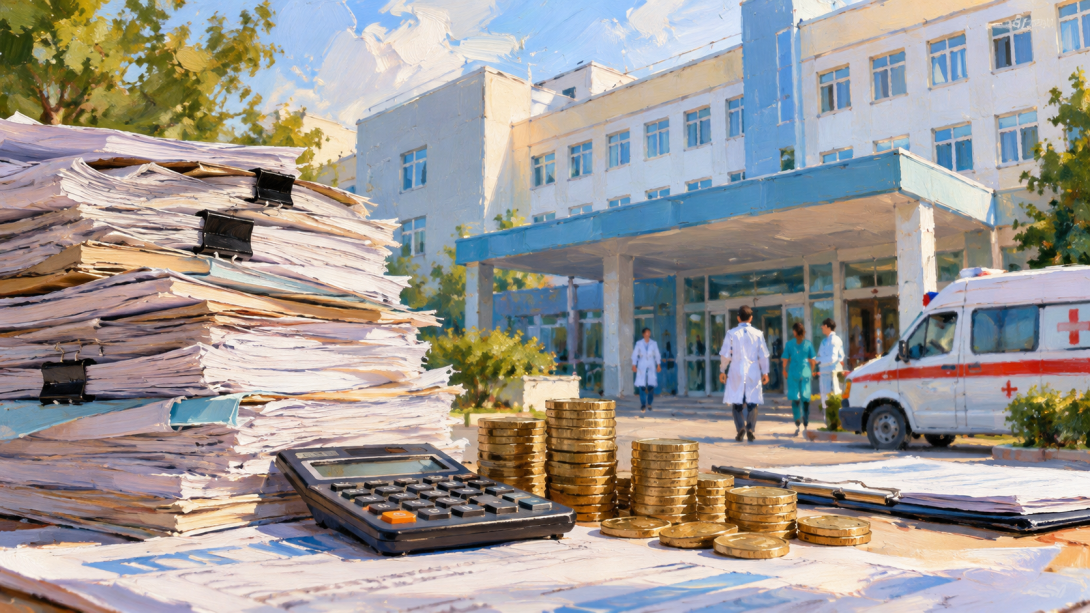
The Maslikhat of the West Kazakhstan Region (WKR) approved the allocation of 300 million tenge to repay the accounts payable of the regional multi-profile hospital to a supplier of medical devices. At the same time, the institution's total debt reached 2 billion tenge, and the decision raised questions among some deputies because of the legal grounds for the payment and the hospital's financial management.
WHAT THE BUDGET FUNDS WERE ALLOCATED FOR
According to the publication "Uralskaya Nedelya", the issue of allocating the funds was considered under an accelerated procedure. Deputy Mereke Gabdualiev questioned the lawfulness of such financing and proposed removing the issue from the agenda until the grounds for the payment were clarified.
Director of the regional multi-profile hospital Yerlan Toksanov reported a debt to the company APEX and Co for medical devices. It arose in 2024 and reached 400 million tenge. According to him, recovery of the debt through the courts and the possible blocking of accounts could complicate the operation of the institution, which employs around 800 staff.
WHY THE HOSPITAL'S DEBT REACHED 2 BILLION TENGE
Separately from the debt to APEX and Co, the management of the medical institution reported a total accounts payable for medicines and medical devices, which has been accumulating since 2022. Over the past two years it has grown by approximately 1.8 times.
In the health department, the financial difficulties are explained by the gap between treatment tariffs and actual costs. According to an explanatory note, the cost of clinical cost groups — the tariffs under which patients' treatment is paid for — has not changed since 2019.
At the same time, costs for salaries, medicines, medical devices and utilities increased. The department also cited an increase in VAT from 12% to 16% as one of the factors making procurement more expensive.
WHICH EXPENSES EXCEED REVENUES
The hospital's management reported that it directs funds primarily to staff salaries, mandatory payments and utilities. Not enough money remains for settlements with suppliers to repay the accumulated debts.
As an example, representatives of the institution cited the cost of treatment: in certain areas the tariff is around 44 thousand tenge, whereas a single CT scan, including with contrast, costs 38–40 thousand tenge. At the same time, a patient may stay in hospital from several days to two weeks or longer.
According to the management, monthly electricity costs have risen from 6 million tenge in May to 14–18 million tenge. Another problem cited was the restriction on payment for the services of the admissions department under a linear scale from July: the reimbursed volume amounts to 9 million tenge per month, whereas actual costs reach 18–20 million tenge and more.
During the discussion it was also stated that medical institutions in the region received only 50% of the payment for July from the Social Health Insurance Fund. The source material does not specify which settlement period is meant or how this situation affected the hospital's total debt.
WHY THE DEPUTIES DOUBTED THE DECISION
Mereke Gabdualiev stated that the documents submitted by the health department were insufficient to make a decision. According to him, the department cited paragraph 7 of the Rules for Payment of Medical Services, which allows services of a state enterprise to be paid for from the local budget in excess of the amount of the procurement contract.
The deputy questioned whether this provision could be used to repay the hospital's debt to a supplier of medical devices. He proposed clarifying the legal basis for the payment and the wording of the draft decision.
After the session, Gabdualiev also reported that the deputies had not seen the hospital's audit report, although the institution's director Yerlan Toksanov stated that an audit had been conducted. The deputy himself voted against the allocation of funds, pointing to the need to examine the effectiveness of management and the use of money.
HOW THE VOTE ENDED
Despite the objections, the majority of deputies supported the draft decision to allocate 300 million tenge. Thus, the maslikhat approved financing to repay part of the hospital's accounts payable.