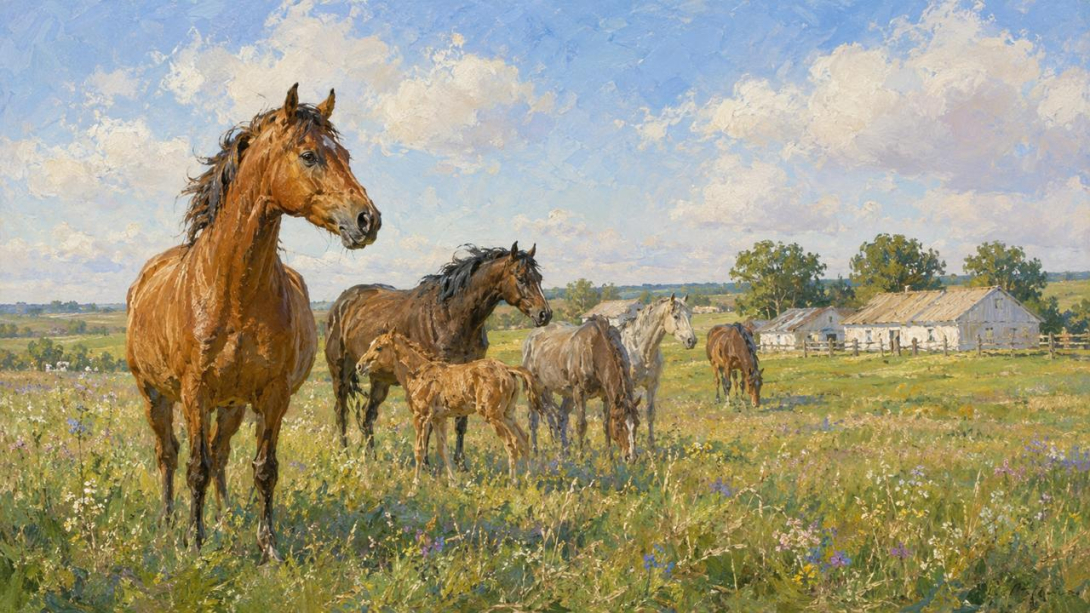
The Kostanay breed, the only native riding horse breed in the country and part of the nation's selective breeding heritage, has once again found itself at the centre of a scandal involving its very custodian, Қазақ Тұлпары LLP. According to figures cited by the enterprise's director, Sholpan Murzagulova, the breeding stock has fallen to a critical level - fewer than 100 head - wages are not being paid, and the sole investor has suddenly withdrawn from its obligations, leaving the horses without care. Against this backdrop, a question inevitably arises: why does a structure subordinate to the National Agrarian Scientific and Educational Centre JSC (NASEC) repeatedly find itself in a position where it is more advantageous to run an asset into the ground rather than save it - and who might ultimately end up with the valuable land?
WHAT HAPPENED
Қазақ Тұлпары LLP is a subsidiary of NASEC, an organisation under the Ministry of Finance of the Republic of Kazakhstan. According to comments by the LLP's director, Sholpan Murzagulova, from March 2026 the sole source of funding for the enterprise was Barys Farm headed by Askhat Tuleuov, which had undertaken to fully cover the upkeep of the farm. However, Barys Farm itself is not part of the NASEC structure; legally and organisationally they are two separate entities, bound only by contractual obligations.
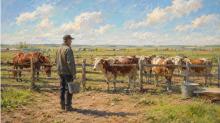
According to the enterprise's director, the LLP has accrued wage arrears and debts to contractors. Then, as Murzagulova recounts, Askhat Tuleuov unilaterally withdrew from caring for the horses and demanded that the animals be removed from the summer milking site on the territory of the Zarechny Agricultural Experimental Station (AES) - without prior notice, which she says was stipulated in the contract. When representatives of the LLP arrived at the site, she claims the horses were without a herdsman, water, and fodder. On 10 July 2026, the herd was moved by their own efforts to the village of Osynovka; one foal, according to the director, was in a critical condition and was taken to the village of Zarechnoye for treatment.
Separately, Murzagulova draws attention to the scheme involving hay meadows. She says the LLP leases part of its land to the same Barys Farm, which then sells the hay harvested there back to the enterprise. Furthermore, she claims a statement was filed against her by Sabyrzhan Kalmukhametov, director of the asset management department at NASEC, whom Murzagulova links to furthering the interests of Barys Farm.
WHY THE KOSTANAY BREED MATTERS TO THE STATE - AND THE ROLE OF THE LAND
Қазақ Тұлпары is not an ordinary agricultural enterprise; it is one of the few sites in the country where targeted selective breeding work with the Kostanay breed is carried out, including a genetic material bank. The fate of the stud farm has previously been the subject of state initiatives. At various times, there have been plans to create an Institute of Horse Breeding on the basis of the Aktobe AES, which would have included the LLP. However, as is often the case, nothing came of it.
Specialists from the industry have also become involved in saving the breed; in particular, the Koblandy Stud Farm provided stallions to improve the bloodline. Another significant resource is the enterprise's land. The Karabalyk AES once invested in cultivating fallow plots, meaning the asset is of interest not only to livestock breeders but also to those who value it purely as a land resource.
It is also important to note that what is happening with Қазақ Тұлпары is far from an isolated incident, but part of an all-too-familiar pattern. Previously, the editorial board of the FBRK wrote about the systemic crisis within NASEC's structures. A striking example of this was the situation at the A.I. Barayev Scientific and Production Centre for Grain Farming. This involved reports that a significant portion of the holding's land (over 30% of approximately 140,000 hectares of arable land) was effectively being leased out under the guise of "joint activities", while institutes receiving budget funding as scientific institutions were, in practice, living off a percentage of others' crops. Similar signals were received from the A.F. Khristenko Karaganda Agricultural Experimental Station, also under NASEC, where grain was shipped out via fictitious deals and employee bonuses were paid from budget funds in violation of established procedures.
WHAT THIS MEANS
When the facts are pieced together, what emerges is not an isolated conflict between economic entities, but a structural vulnerability in NASEC's asset management model. The scheme, whereby a subsidiary is entirely dependent on a single external investor - one formally outside the state structure itself - creates a gap in accountability. If something goes wrong, NASEC can claim the responsibility lay with the private partner, while the private partner can claim its role was auxiliary, not systemic. It is likely in this gap that the horse stock has been "lost".
The scheme described by the LLP's director - leasing out hay meadows and then buying the same hay back - fits a pattern already familiar from other NASEC structures. The asset is not being developed, but rather serves the interests of an outside user, who generates income from someone else's land, leaving the formal owner with debts.
The value of the land held by the LLP, and its potential as an agricultural asset, is unlikely to be a secret to NASEC's management, given the interest shown in similar sites by other farms in the region. Against this backdrop, the behaviour of the sole investor, who withdrew from maintaining the horses without prior notice, and the statement made to the LLP's director by a representative of the relevant department, hardly seem coincidental. Could it be that for certain parties it is far more advantageous to run the enterprise into a state where its land can be more easily transferred to an "efficient" user, rather than supporting the costly and slowly recouping selective breeding work? One suspects that this may well be the logic guiding the "interested parties" whose involvement in this story is all too apparent.
The editorial board of the FBRK will continue to monitor developments.