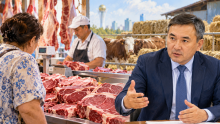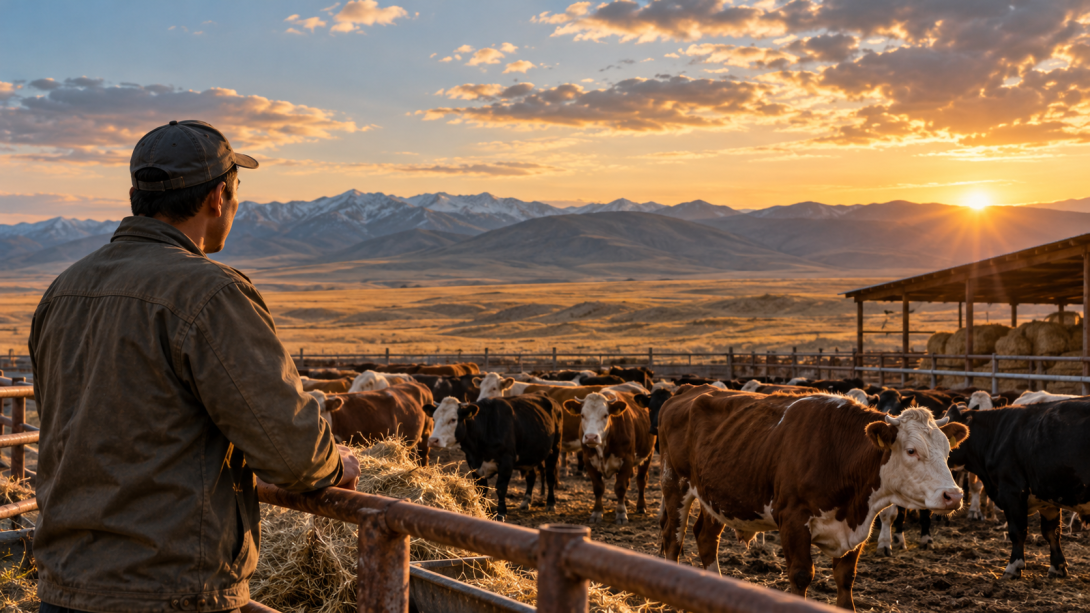
Kazakh farmers are facing a shortage of funds to purchase pedigree livestock under state programmes. The reason is that the calculation prices set by the state are significantly lower than market prices, so even approved loans are not always enough for the planned number of animals.
WHY FARMERS DO NOT HAVE ENOUGH MONEY
As reported by inbusiness.kz, the problem was raised by deputies of the Auyl party. According to the Comprehensive Plan for the Development of Livestock Breeding for 2026–2030, Kazakhstan intends to increase the cattle population from 8.2 million to 12 million head. At the same time, the share of pedigree animals has remained at 12% for several years.
The problem is particularly noticeable in the Ulytau region, which was allocated KZT 3.4 billion. Six projects worth KZT 2 billion have already been approved, but their implementation has been called into question because of the cost of the animals.
Under the terms of the programmes, the maximum calculation price of a pedigree bull is KZT 1.8 million. At the same time, in Australia such animals cost on average more than KZT 3.5 million, and in Canada — from KZT 3 million to 5.5 million. An additional difficulty is created by the requirement of the Bereke and Igilik programmes to purchase exclusively imported pedigree livestock.
WHAT THE DEPUTIES PROPOSE TO CHANGE
Parliamentarians sent a request to the Minister of Agriculture Aidarbek Saparov with a proposal to revise the mechanism for calculating the cost of animals.
The deputies also proposed developing a programme for the mass improvement of the breed qualities of livestock, modernising artificial insemination technologies and moving the issuance of pedigree certificates to a digital format.
According to them, farmers are now forced to seek the missing funds on their own or to reduce the number of animals purchased.
WHY FARMERS ARE IN NO HURRY TO TAKE OUT LOANS
A similar situation is observed in the Kostanay region, where only eight applications were submitted for preferential loans.
At the same time, state loans are provided at 6% per annum for a term of up to 10 years with a two-year deferral of payments. The requirement for a 10% down payment has been abolished, and the Damu fund can guarantee up to 85% of the loan amount.
The akim of the region, Kumar Aksakalov, believes that the state has created the necessary conditions for the development of livestock breeding, but local authorities are not working actively enough with farmers.
At the same time, the deputies point to another problem: even with accessible lending conditions, the established price restrictions do not allow the planned number of pedigree livestock to be purchased.
WHAT THE CONSEQUENCES FOR LIVESTOCK BREEDING ARE
The difference between calculation and market prices creates additional costs for farms. Farmers have to pay extra from their own funds, and if they do not have them, they have to revise their projects.
As long as the mechanism for calculating the cost of animals remains unchanged, the implementation of programmes to increase the pedigree livestock population faces financial constraints.