FBRK has received official responses from two specialised departments of the Aktobe Region regarding a request about quarries in the floodplain of the Ilek River. The agencies confirmed that a comprehensive assessment of the impact of quarries on the hydrological regime and water balance of the Ilek has still not been carried out; the matter of conducting such an assessment is currently only under consideration by the akimat.
WHAT HAPPENED
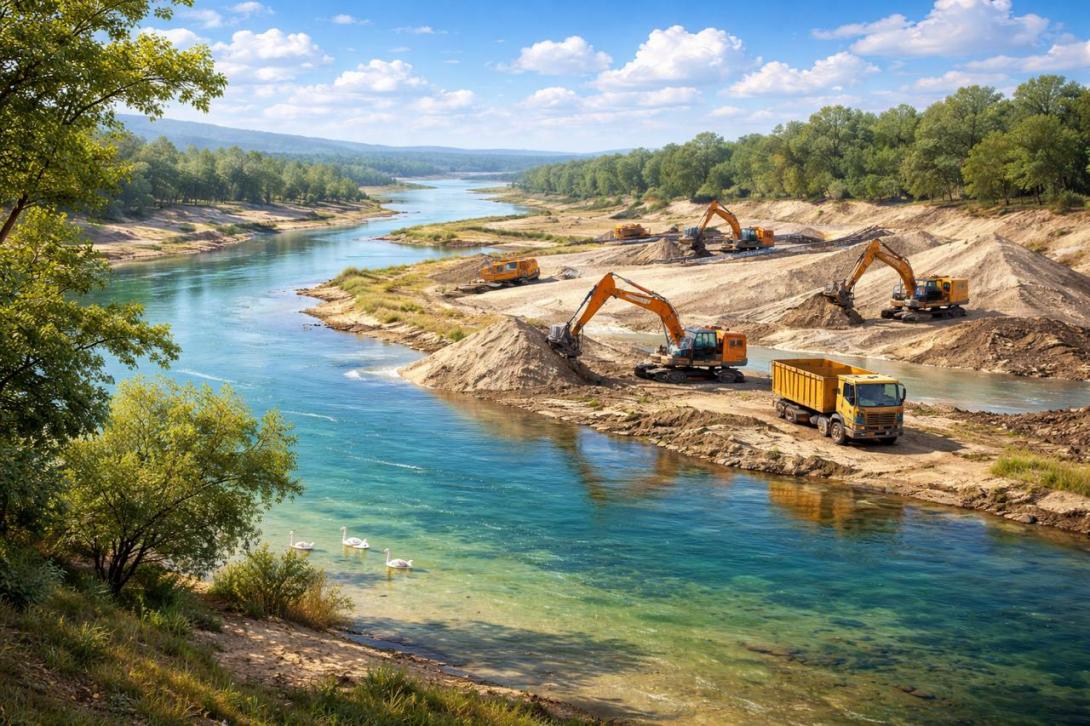
Earlier, the FBRK editorial team reported that along the Ilek floodplain there are more than 50 land allotments for sand extraction and sand and gravel mixture, and the quarries of some companies - for example, PGS Bestamak LLP and PGS-Karatogay LLP, are located in the water protection zone of the river or directly in its channel. Our editorial team sent a request to the Aktobe Region akimat, which, in turn, forwarded it to the relevant specialised departments.
WHAT THE DEPARTMENT OF SUBSOIL USE RESPONDED
The Department of Entrepreneurship and Industrial-Innovative Development of the Aktobe Region stated that a specialised comprehensive assessment of the impact of quarries on the hydrological regime and water balance of the Ilek in the form of a separate scientific study was not commissioned and was not carried out, since this function does not fall within the competence of the department. 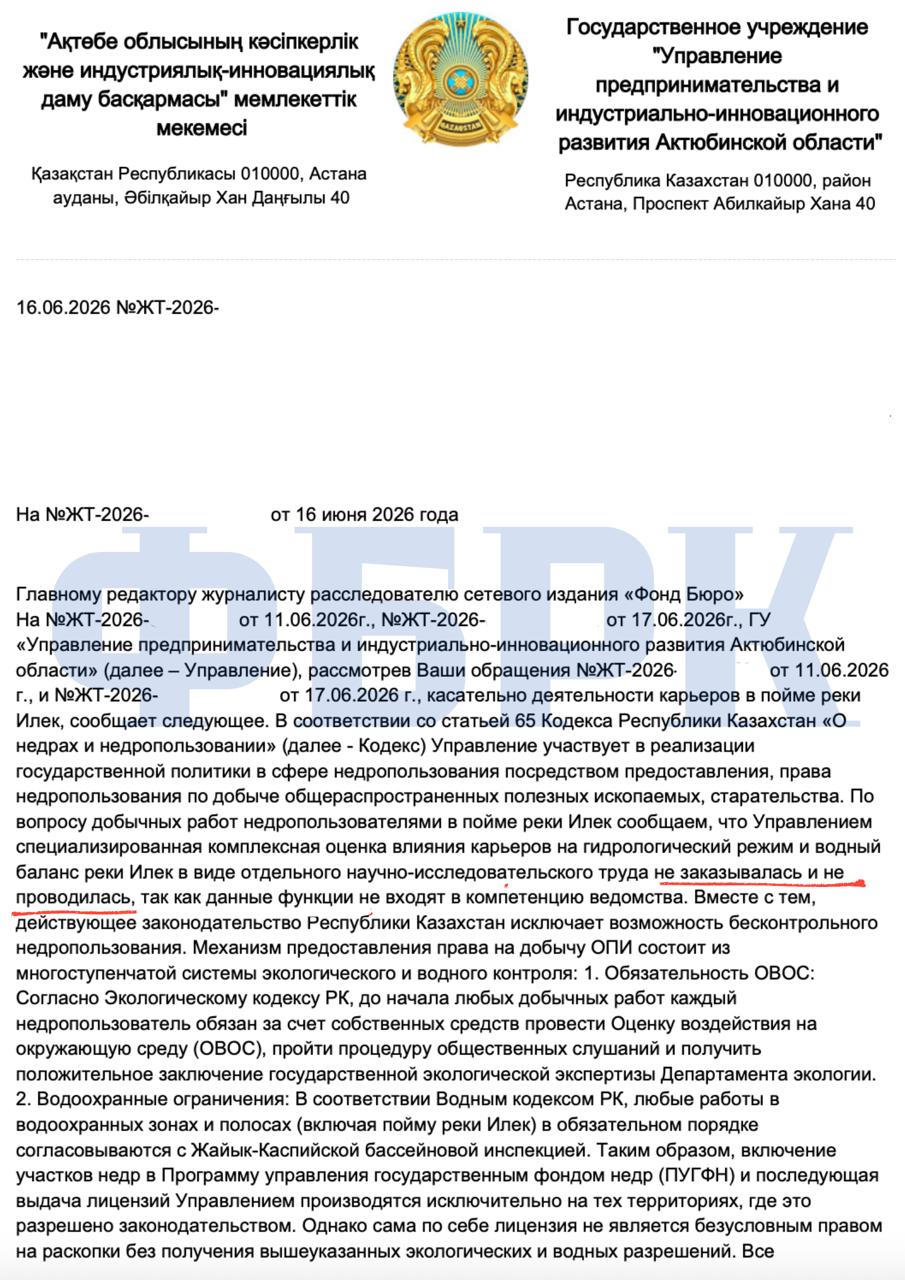
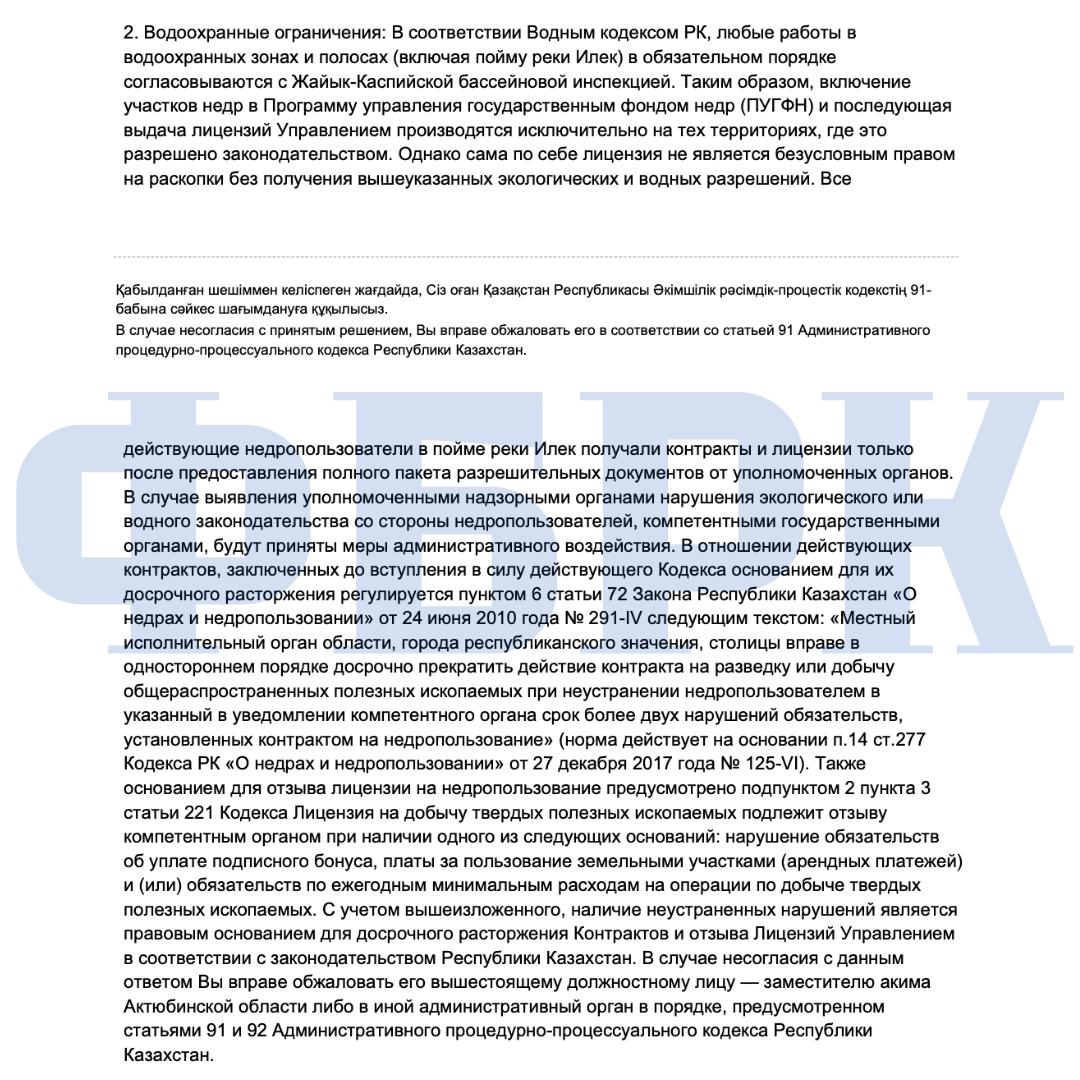
At the same time, the department emphasised that the issuance of licences for the extraction of common mineral resources (CMR) requires passing an Environmental Impact Assessment (EIA), public hearings, and a positive conclusion from the state environmental review. Works in water protection zones, including the Ilek floodplain, must additionally be coordinated with the Zhayyk-Caspian Basin Inspectorate.
The department noted that if violations of environmental or water legislation are detected, the authorised bodies will take measures of administrative action, and the presence of unresolved violations is a legal basis for termination of contracts and revocation of licences.
WHO IS ACTUALLY RESPONSIBLE FOR THE RIVER ASSESSMENT
The Department of Natural Resources and Environmental Management Regulation of the Aktobe Region, in turn, reported that the issue of conducting that specific comprehensive assessment of the impact of quarries on the hydrological regime, groundwater level and water balance of the Ilek is under consideration by the regional akimat. 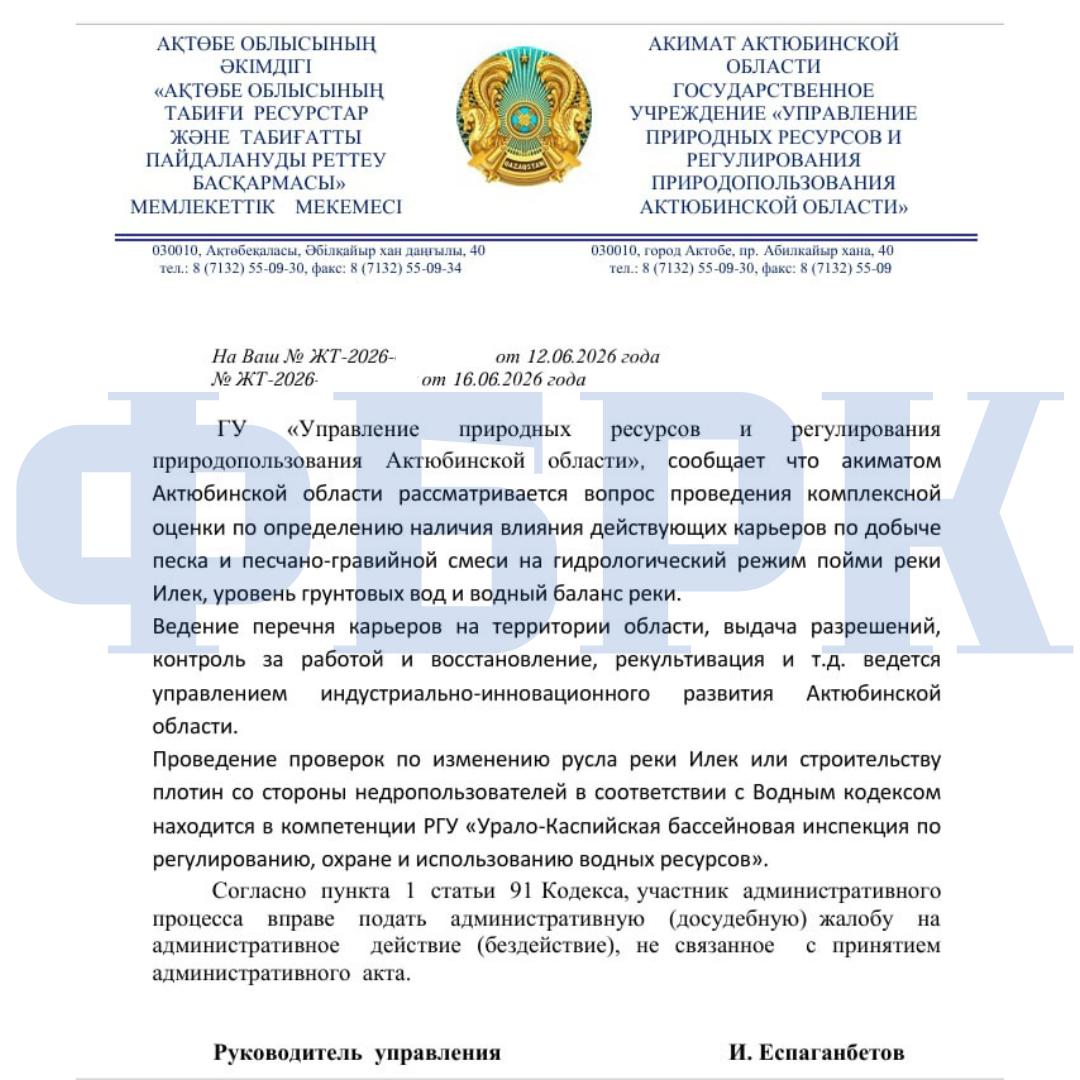
In other words, despite the many years of operation of several dozen quarries in the river floodplain, their combined impact has still not received a comprehensive assessment and remains a subject of discussion.
The department also clarified the distribution of powers between the agencies: the accounting of quarries, issuance of permits, control over the work of subsoil users, as well as land reclamation, is carried out by the Department of Industrial-Innovative Development of the Region. And inspections regarding changes to the Ilek riverbed or the construction of dams fall under the competence of the Republican State Institution "Ural-Caspian Basin Inspectorate".
WHAT NEXT
If we pull together everything that FBRK has recorded concerning the Ilek, a logical question arises: why, with such a number of visible violations and complaints, has a comprehensive assessment of the impact of quarries on the river still not been started and remains merely a subject of discussion?
The answer, judging by the official comments, lies not in the sphere of ecology, but in the sphere of management. To conduct such an assessment, it is not enough to acknowledge the existence of the problem - a client, funding, and a state body willing to take responsibility for the process and its results are necessary. So far, none of these conditions appear to have been met.
And the Ilek is far from an exception. A similar situation arose not so long ago on other rivers in Kazakhstan. Previously, FBRK wrote about the Bukharka distributary channel in the Atyrau Region, which effectively turned out to be "no-man's land". Similar questions arose around the Ural River as well, where more than 640,000 sq. m of coastal land was allocated for the industrial extraction of sand and gravel mixture.
In all these stories, state bodies, in one way or another, acknowledge the existence of the problem, but its solution is postponed. As long as the consequences remain manageable, the issue passes from one department to another for years. And only when the damage becomes too noticeable to ignore does the search for those responsible begin.