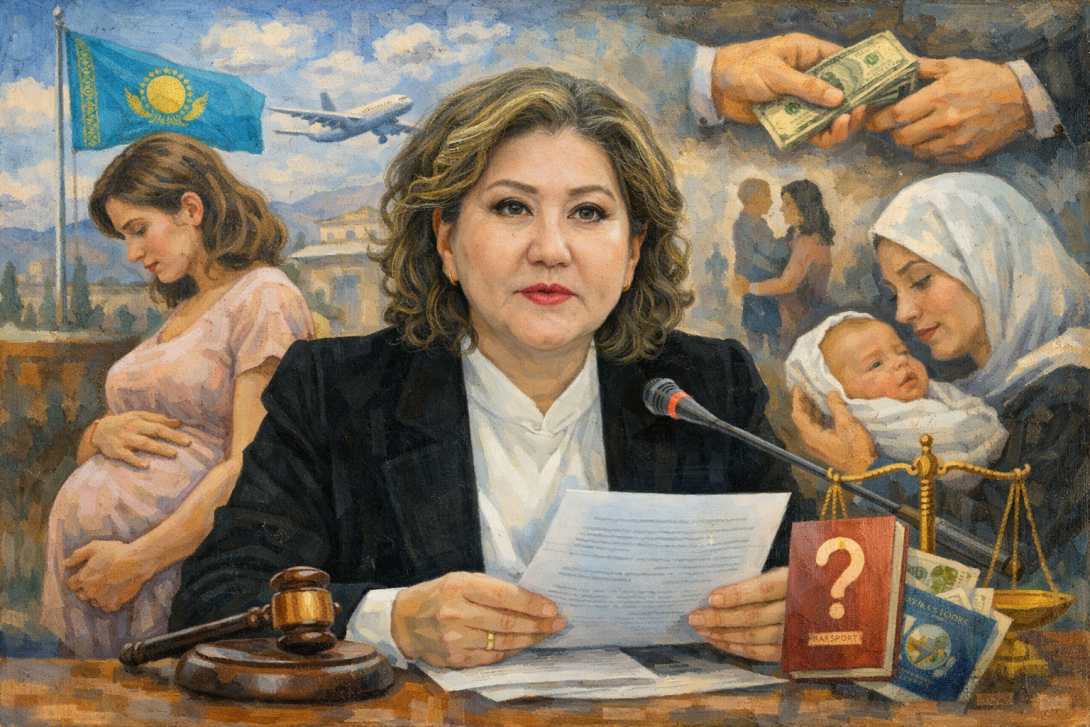
Mazhilis deputy Guldara Nurym has proposed tightening the regulation of surrogacy in Kazakhstan, citing risks of exploiting women and potential violations of children's rights. According to her, current regulations do not fully protect programme participants and create conditions for conflicts related to the citizenship and legal status of newborns.
According to Kursiv.media, the deputy noted that foreign citizens can currently use surrogacy services in Kazakhstan. She stated that this often leads to difficulties in determining the child's citizenship and parentage, and in some cases, to the risk that children lack a clearly defined legal status.
"The participation of young women in surrogacy programmes due to financial hardship carries the risk of negative psychological consequences and trauma associated with separation from the newborn. The involvement of significant financial resources creates a threat of turning children into a 'commodity', and the exploitation of vulnerable segments of the population could be seen as a 'new form of human trafficking'," the deputy stated.
According to Nurym, Kazakhstan has become an attractive destination for so-called 'reproductive tourism', as surrogacy is either completely banned or significantly restricted by law in many countries.
As the deputy stated, foreign agencies actively cooperate with Kazakh in vitro fertilisation (IVF) clinics, using the biological material of Kazakh women for commercial purposes.
"Women are not always aware of the possible negative consequences for their health, which could harm the gene pool and the health of the nation," the deputy argued.
In this regard, Guldara Nurym proposed a series of measures aimed at strengthening state control in the field of surrogacy. In particular, she considers it necessary to:
- introduce mandatory licensing for clinics and agencies providing surrogacy services;
- create and maintain an open state registry of such organisations;
- ensure that the consent of surrogate mothers is voluntary, informed, and confirmed in accordance with the procedure established by law;
- provide for mandatory notarisation of all surrogacy contracts using digital accounting systems.
Separately, the deputy proposed considering the possibility of restricting the provision of surrogacy services on the territory of Kazakhstan exclusively to citizens of the Republic of Kazakhstan.