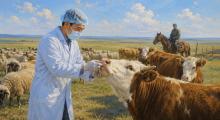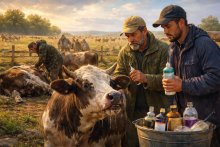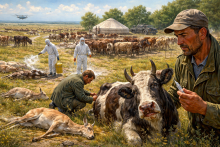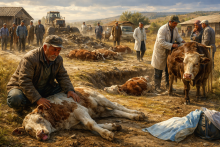
A recent statement by the Minister of Agriculture Aidarbek Saparov about a favourable epizootic situation provoked a sharp reaction from the professional veterinary community. The chairman of the NGO 'Veterinarians of the West Kazakhstan Region',
Doctor of Veterinary Sciences Gaisa Absatirov directly stated that the minister's words about the absence of particularly dangerous diseases 'do not correspond to reality'.
WHAT THE MINISTER SAID
In response to a question about cases of livestock mortality, the Minister of Agriculture Aidarbek Saparov stated that the situation is under complete control.
'Livestock are not dying anywhere. Vaccination is being carried out, everything is going according to plan. So there is no cause for concern,' the minister reassured.
To follow-up questions - about the diagnosis, the number of affected animals and the name of the vaccine being used - the minister gave no answer, merely stating that cases of disease had indeed occurred, but that there was 'no particularly dangerous disease'.
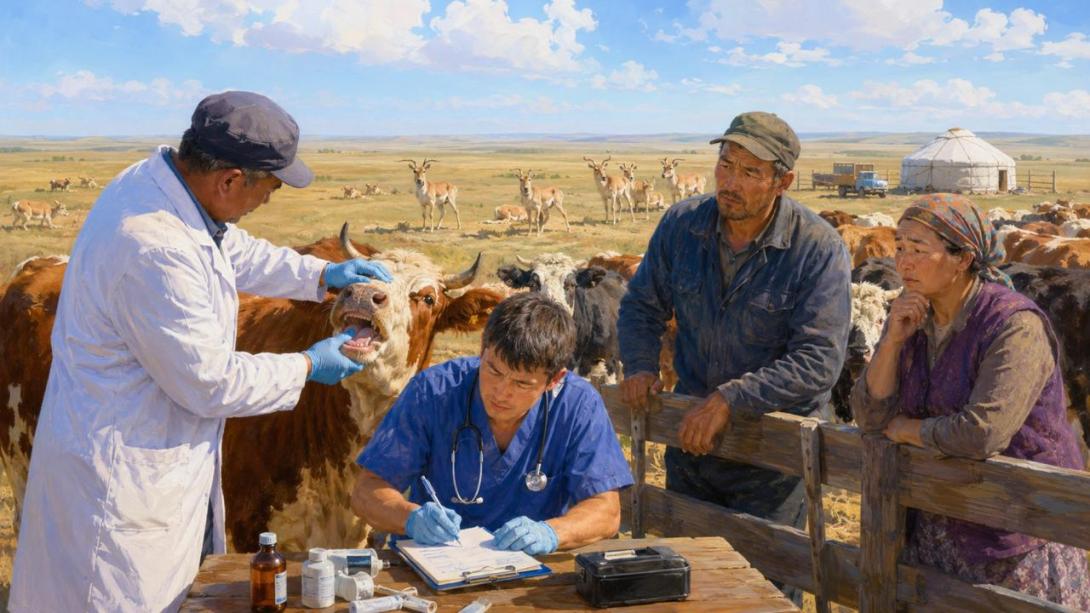
Meanwhile, in the West Kazakhstan Region, the deaths of saiga antelope and diseases among domestic livestock continue to be recorded in the Bokeyorda, Zhanakala, Kaztalovka and Zhanibek districts. Farmers from the affected regions and some specialists point to symptoms which, they say, are characteristic of foot-and-mouth disease. However, according to official statements from the Ministry of Agriculture, no cases of foot-and-mouth disease have been recorded either in saiga or in domestic livestock.
At the same time, despite statements about the prompt disposal of saiga, animal carcasses continue to be found along roads and in the steppe. According to the Ministry of Ecology, the country has recorded the deaths of approximately 26,000 saiga out of a population of about 4 million before calving. The animal deaths are being described as seasonal and 'natural', and the authorities plan to resume so-called population regulation later this year.
REACTION FROM THE EXPERT COMMUNITY
The minister's evasiveness caused open indignation among veterinary specialists. In the opinion of Professor Gaisa Absatirov, the official should have held a dedicated briefing given the importance of the issue raised, rather than answering the journalist 'on the fly' - in his assessment, this is an oversight by the leadership of the veterinary control and supervision committee, which failed to properly brief the minister with evidence.
On his personal Facebook page, Professor Absatirov provided figures for certain diseases which, he claims, are currently spreading actively across the country.
Thus, in 2023, 37 cases of anthrax were registered among humans, in 2024 - 20, in 2025 - 8 confirmed cases in the Akmola and Karaganda regions, plus another 3 in Shymkent and the Turkestan region. Regarding rabies, outbreaks with fatal human cases are being recorded in the Kostanay, Mangystau, Zhambyl, West Kazakhstan and East Kazakhstan regions. For its part, the specialist called the current Ministry of Agriculture regulations on brucellosis ineffective and in need of refinement.
Gaisa Absatirov is convinced that cases of 'unknown diseases' in livestock in the Kyzylorda, Pavlodar, Kostanay, Akmola, Karaganda, Atyrau and West Kazakhstan regions are clinically similar to foot-and-mouth disease, but the department systematically reclassifies them as stomatitis, viral diarrhoea or rhinotracheitis - instead of timely diagnosis.
WHO ULTIMATELY PAYS THE PRICE
In the end, we have a situation where the relevant expert community is effectively opposed to its own ministry, and the hostages of this confrontation remain the farmers, who lose livestock without an official diagnosis or compensation. The Ministry, following Saparov's rhetoric, is not so much fighting epizootics as it is fighting the very word 'foot-and-mouth disease', and the longer it refuses to acknowledge the problem, the more costly it becomes for those who work the land.
It must be emphasised that foot-and-mouth disease is a zoonotic infection, meaning the virus is capable of being transmitted to humans, and therefore the suppression and delayed diagnosis of such cases may sooner or later affect not only livestock owners but also the entire population.