A portable TDS meter, held under a tap in Shchuchinsk, showed a mineralisation level labelled as "unpleasant tasting" water on the household scales used by manufacturers of such devices. The editors of FBRK sent inquiries to the sanitary authorities of the Akmola Region and the Ministry of Health to determine what this figure means from a legal standpoint. The responses from the two authorities almost verbatim coincided, but did not give a direct answer to the main question: does the specific indicator meet the standard and is the water suitable for domestic use.
WHAT THE DEVICE SHOWED IN SHCHUCHINSK
Portable TDS meters (Total Dissolved Solids) measure water mineralisation in ppm (parts per million - particles dissolved in water per million). According to the scale of the manufacturers of such devices, 0–50 ppm is ideal drinking water, 300–400 ppm is hard but acceptable, and 400–500 ppm is described as "unpleasant tasting" tap water, bordering on "water unfit for drinking". It was into this range that the reading taken from a tap in the town of Shchuchinsk, Burabay District, Akmola Region, fell, measuring 431 ppm. 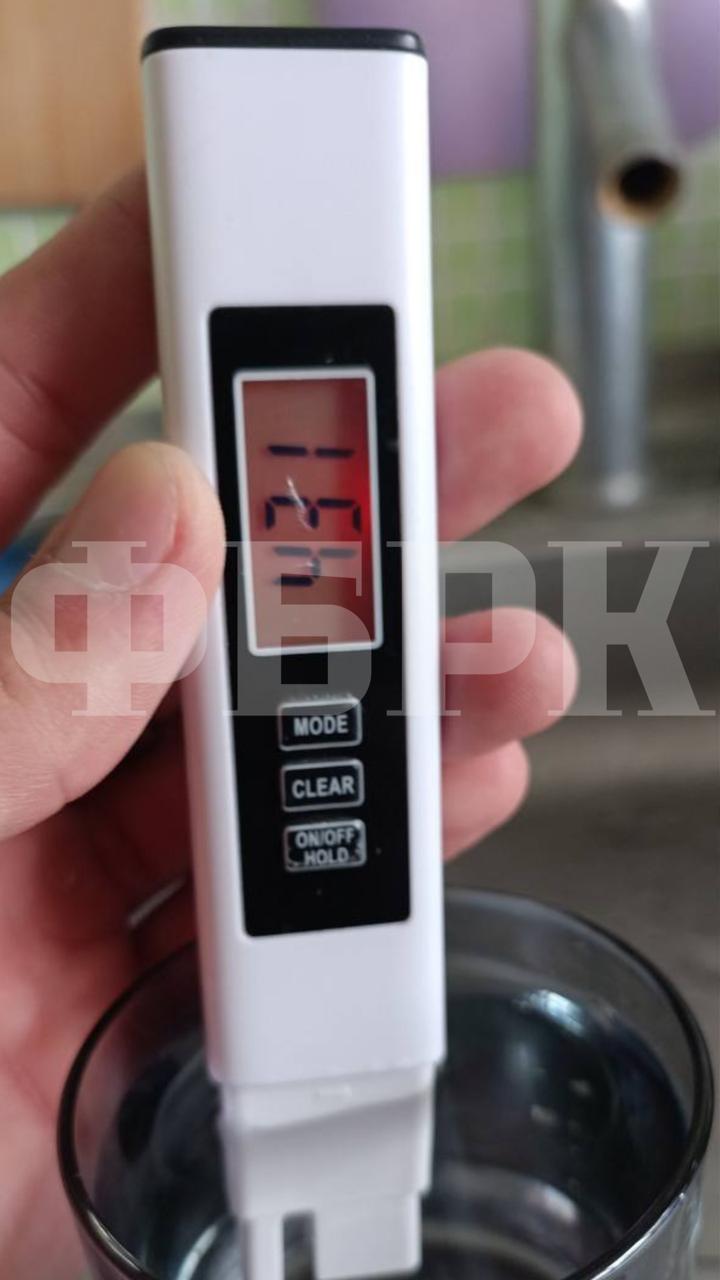
WHAT THE COMPETENT AUTHORITIES RESPONDED
The Department of Sanitary and Epidemiological Control (DSEC) of the Akmola Region reported that drinking water quality is regulated by Hygiene Standards, approved by order of the Ministry of Health dated 24 November 2022, according to which "total mineralisation (dry residue)" must not exceed 1000 mg/l, and in certain cases a temporary derogation up to 1500 mg/l is permitted by decision of the Chief Sanitary Doctor. The authority stated that the unit ppm is not used in Kazakh legislation.
The Committee for Sanitary and Epidemiological Control of the Ministry of Health gave a virtually identical response: the same standard of 1000 mg/l, the same clarification about the absence of ppm among the units used. Neither authority directly answered whether the specific indicator of 400–450 ppm meets the requirements and whether such water is suitable for domestic use.
WHAT THIS MEANS
Formally, the unit ppm is indeed not specified in regulations. But for aqueous solutions, to which drinking water belongs, 1 ppm is numerically equal to 1 mg/l - this ratio is used by both TDS meter manufacturers and engineering handbooks on water quality. Readings of 400–450 ppm convert without any coefficients to 400–450 mg/l and are compared with the Kazakh standard of 1000 mg/l.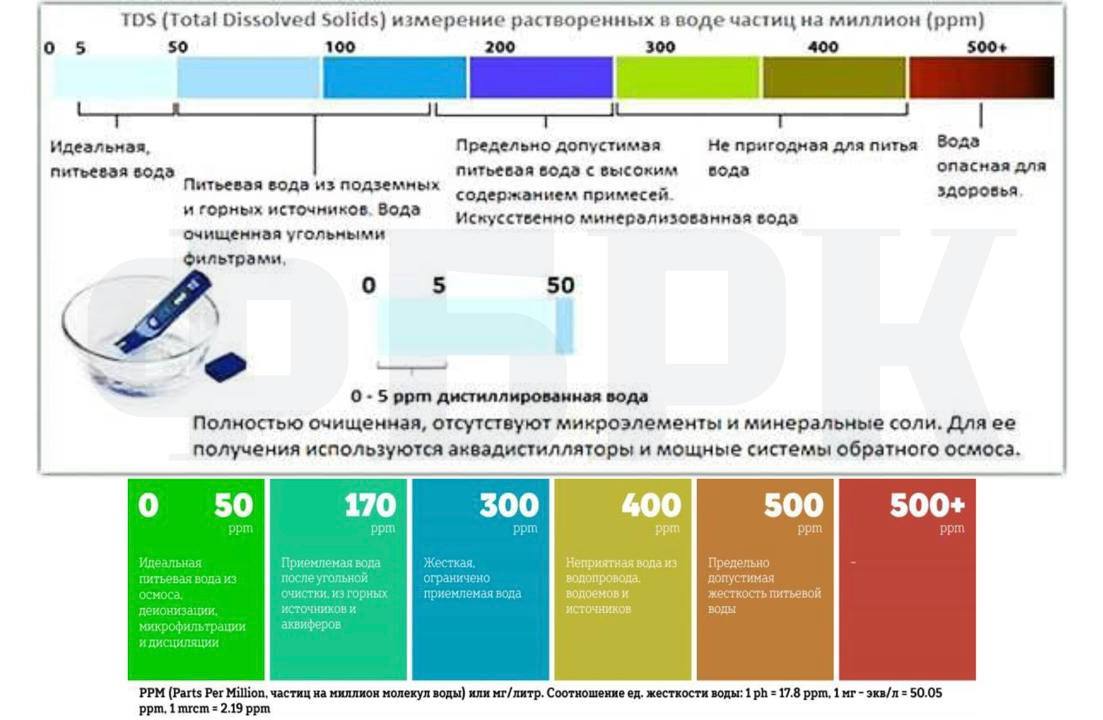
Converted to mg/l, the water from the tap in Shchuchinsk formally falls within the Kazakh standard of up to 1000 mg/l. But this standard is noticeably more lenient than the benchmarks used by household TDS meter scales, where the 500 unit threshold is traditionally linked to the recommended limit of the US Environmental Protection Agency (EPA) for water that is pleasant to taste. It turns out that the water can formally comply with the letter of the Kazakh standard and at the same time fall short of household quality benchmarks.
This creates a paradox. 431 ppm is, logically speaking, the "norm" according to Kazakh requirements, but already "unpleasant tasting" according to the scales of the same TDS meter manufacturers. This means that the current standards effectively guarantee only the safety of the water, but not its consumer quality. In other words, residents may receive water that formally meets the requirements, but objectively falls short in its characteristics of what is considered