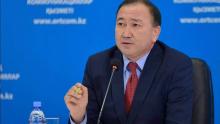
Mazhilis deputy and journalist Yermurat Bapi published a detailed analysis in the newspaper «DAT» of changes in the country over recent years, explaining the reasons for the sceptical attitude of some of society towards reforms. The author points to systemic transformations in the political and economic spheres, backing up his conclusions with specific data.
POLITICAL REFORMS ARE CHANGING THE BALANCE OF POWER
The constitutional reform of 2022 ended the era of super-presidential rule. Parliament received real levers of influence over the formation of the government, and the number of senators appointed by the President was reduced from 15 to 10. The introduction of a single seven-year presidential term limited the concentration of power.
The creation of the Constitutional Court gave citizens direct access to constitutional justice. Since 2023, the court has considered more than 7,000 applications. The status of Elbasy, with its constitutional guarantees, was abolished.
The electoral system underwent changes. A single-mandate electoral system was introduced, thanks to which 30% of Mazhilis deputies were self-nominated candidates. The threshold for parties to enter parliament was lowered from 7% to 5%, allowing the OSDP («National Social Democratic Party») and the «Auyl» party to gain representation in the lower house.
ECONOMIC TRANSFORMATIONS AND THE FIGHT AGAINST CORRUPTION
In the economic sphere, there is a dismantling of monopolistic structures and a return of illegally acquired assets. The system in which a narrow circle of business groups influenced the legislative agenda and the distribution of government contracts has ceased to exist.
The anti-corruption campaign has yielded results. Since 2022, the return of assets worth around 1.12 trillion tenge has been secured, of which 371.2 billion was recovered in 2024. The funds are directed towards social projects: 9 educational institutions have been built, 162 projects are being implemented in healthcare and 159 in the field of water supply.
The structure of the economy is diversifying. Gross Domestic Product (GDP) grew by 1.6 times from 2018 to 2024. The share of the oil and gas sector decreased from 21.1% to 16.9%. The non-resource sector reached 75.9% of GDP. The volume of IT services in 2024 reached 1.5 trillion tenge, an increase of 36.3%. Over 28,000 jobs have been created in the IT sector.
DEBUNKING THE MYTHS OF «SHADOW GOVERNANCE»
The deputy refutes claims about the influence of Nursultan Nazarbayev on current policy. Since June 2022, the first president has been completely removed from participation in state governance; his relatives do not hold posts in state bodies, and some have become subjects of criminal cases.
The author emphasises that meetings of former leaders are a normal occurrence in international practice and do not signify their influence on policy.
FOREIGN POLICY AS A PRIORITY
Bapi notes the importance of the foreign policy activity of President Kassym-Jomart Tokayev. In conditions of geopolitical turbulence, situated between Russia and China, Kazakhstan needs skilful diplomacy to ensure security.
The author calls on society to objectively assess the changes taking place. Reforms are a complex process requiring time and joint effort. Bapi's analysis confirms the widespread tendency to ignore and misrepresent facts.
Many find it easier to assert that nothing is changing than to acknowledge the time needed for transformations. Some citizens express discontent out of habit, while others become disappointed in advance. However, an unprejudiced look at the processes shows: changes are happening, albeit not at the desired speed.