Airlines in Kazakhstan set their own requirements for carrying portable batteries, taking into account general safety rules. FBK found out what restrictions carriers apply and in which cases a device may not be allowed for carriage.
FBK also sent a request to SCAT regarding the rules for carrying portable batteries. At the time of preparing the material, the airline had not provided a response.
WHO SETS THE REQUIREMENTS
FBK turned for clarification to the Civil Aviation Committee (CAC). It said that specific requirements for carrying portable batteries must be clarified with airports and air carriers.
Astana Airport also recommended contacting the airlines directly.
WHAT RULES APPLY AT FLYARYSTAN
According to FlyArystan, portable batteries with a capacity of up to 100 Wh are permitted for carriage without additional approval.
Devices with a capacity of 100 to 160 Wh are allowed only after obtaining the airline's permission. The request must be sent no later than 24 hours before departure.
Portable batteries with a capacity above 160 Wh are prohibited for carriage.
If a device does not contain information about its capacity in Wh, the airline does not allow it for carriage. One passenger may take no more than two portable batteries.
CAN A BATTERY BE CHECKED INTO BAGGAGE
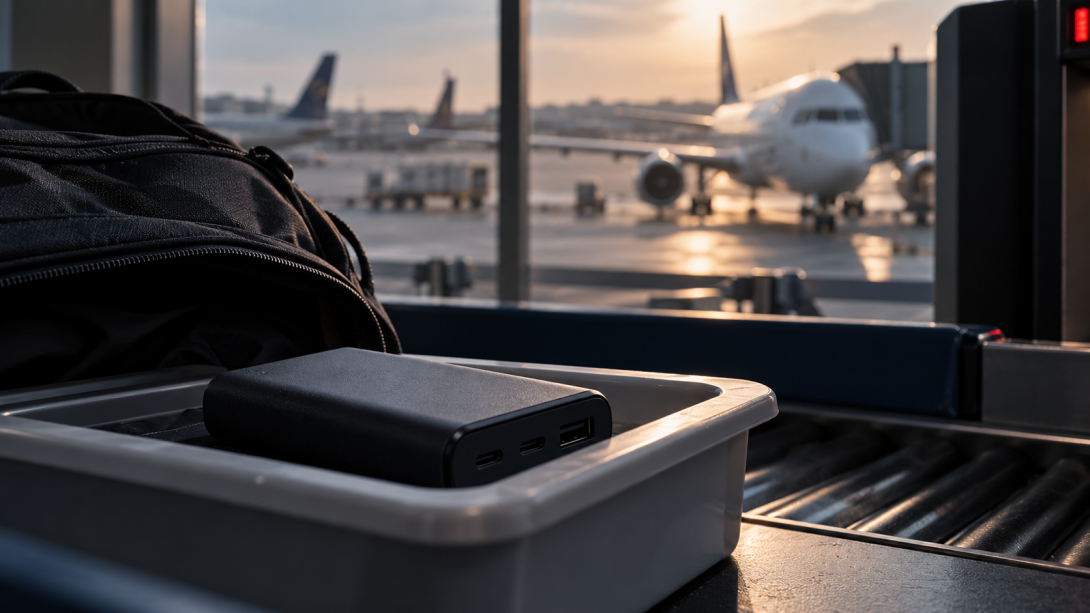
FlyArystan permits such devices to be carried exclusively in hand luggage.
Portable batteries may not be checked into registered baggage. During the flight, it is also prohibited to charge the battery itself or use it to charge other devices.
The portable battery must be under the passenger's supervision and protected from short circuits.
WHAT REQUIREMENTS AIR ASTANA HAS SET
Air Astana has similar restrictions on capacity and the carriage of portable batteries in hand luggage.
The airline's rules also separately mention damaged and faulty devices. Passengers are advised not to take them on a trip.
At the same time, the published requirements do not specify which particular damages make a portable battery unsuitable for carriage.
In particular, it is not separately stated whether a crack on the outer casing is considered a sufficient basis for a ban if there is no other visible damage to the battery.